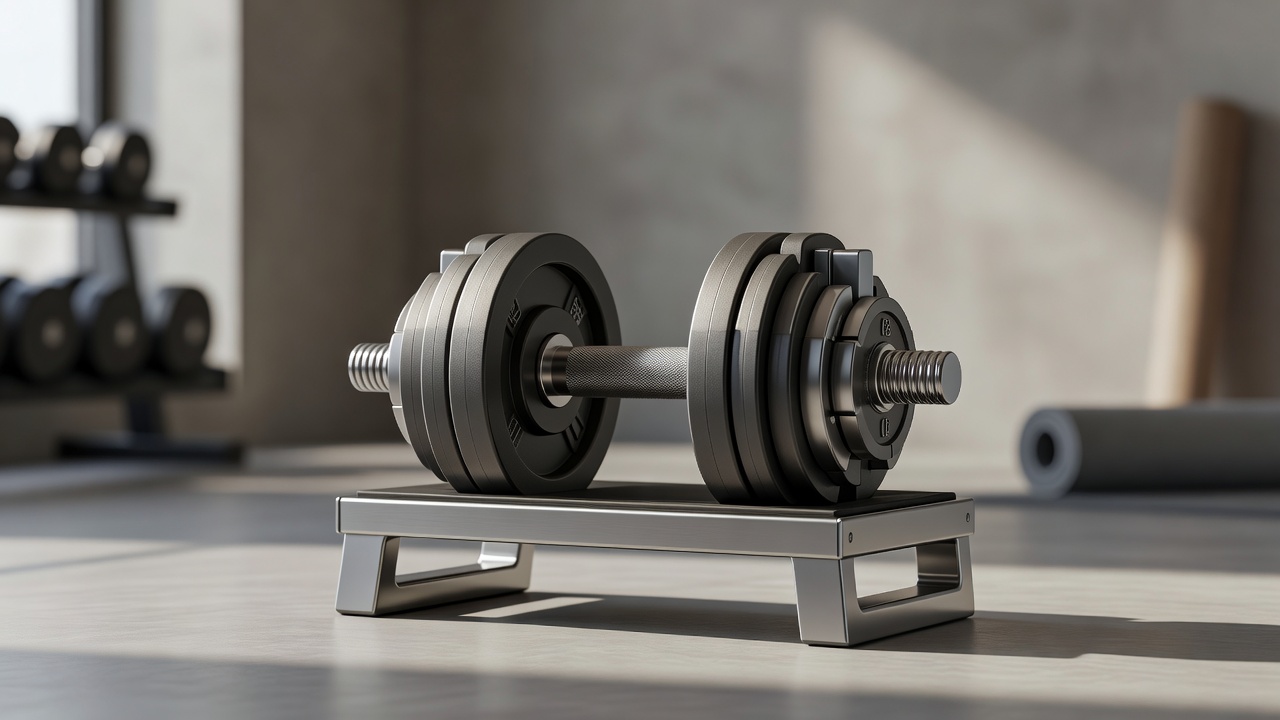
When engineering a fitness space within a living area, the primary objective is modularity. Equipment must serve its purpose with uncompromising stability during use, yet vanish completely when the workout concludes. The fitness industry has responded to the urbanization trend with a surge of foldable and stowable gear, but evaluating the trade-offs between collapsibility and structural integrity is paramount.
Adjustable Dumbbells: Selectorized vs. Spinlock
A traditional rack of dumbbells from 5lbs to 50lbs requires a minimum of a four-foot rack, creating a permanent visual and physical obstruction. Adjustable dumbbells solve this by placing an entire rack's worth of weight onto a single pair of handles.
There are two main categories of adjustables suited for small spaces:
- Selectorized Dumbbells: These use a dial or pin system to drop unused plates into a cradle while you lift the handle with your selected weight. They are incredibly fast to adjust (crucial for drop-sets) and very compact. The primary drawback is durability; the internal plastic components can shatter if dropped, making them unsuitable for explosive movements or rough handling.
- Traditional Spinlock/Collar Dumbbells: These require manually sliding plates onto a threaded or smooth sleeve and securing them with a collar. While they take up slightly more space for plate storage and are slower to adjust, they are practically indestructible and generally much cheaper.
Collapsible Weight Benches
A bench opens up a vast array of pressing and rowing exercises, but a fixed incline bench dominates a room. Folding benches attempt to solve this, but buyers must be extremely cautious regarding hinge mechanisms.
When selecting a folding bench, look for the following criteria:
- Weight Capacity: Do not trust benches rated for under 400lbs total (user weight + dumbbell weight). A low rating indicates thin tubular steel that may warp under lateral shear forces.
- The Locking Pin: The folding mechanism should rely on thick, solid steel pull-pins that fully pierce the frame, rather than spring-loaded clasps.
- Folded Profile: Check the dimension specs for the "folded height." A truly stowable bench should collapse to under 9 inches (23 cm) thick, allowing it to slide beneath a standard bed frame or couch.
Doorway Pull-Up Bars vs. Tension Bars
Vertical pulling is essential for back development. If you are renting, drilling into the wall is out of the question.
The standard cantilever doorway bar uses leverage against the doorframe trim to hold your weight. These are excellent, provided your apartment has sturdy, projecting trim (many modern ultra-minimalist apartments do not).
The alternative is a tension bar (friction bar) that wedges inside the frame. While these require no trim, they rely entirely on outward pressure and friction. They must be checked for tightness before every single set, as temperature fluctuations in the apartment can cause the metal frame to expand or contract, potentially leading to catastrophic slippage during a lift.
Storage Ecology
Purchasing stowable gear is only half the equation; creating a "storage ecology" is the other. This means mapping where gear goes when not in use. Adjustable dumbbells often fit in the dead space at the bottom of a wardrobe. Folding benches slide under beds. Resistance bands and jump ropes can be stored in over-the-door shoe organizers. If the friction of setting up the equipment takes longer than three minutes, psychological barriers will decrease your workout consistency.